This is the Trace Id: ee1b381d1c8f40fdfffdd5a9b95b5f18
January 14, 2025

Mitsubishi Chemical Group approaches from top and bottom to innovate with Power Apps

Operating globally, the company faces a complex cost structure due to different business systems for each affiliation. The company is focusing on reducing costs and optimizing operations.

The company has created a platform for centralized access to apps and content via Microsoft Teams. The company is also promoting the visualization of work styles and citizen development projects.

Visualizing work styles has improved internal collaboration. Citizen development has reduced costs and increased motivation of employees.  The synergy between top-down measures and bottom-up citizen development is driving change.

Mitsubishi Chemical Group Corporation
Aiming to be a “Digital Chemical Company” by promoting “Smarter Employees”

Mitsubishi Chemical Group is a leading comprehensive chemical manufacturer in Japan. With their “Purpose” of “Leading the way in realizing KAITEKI, where the comfort of people, society, and the Earth is sustained through innovative solutions”, they are developing measures while exploring how they can contribute to solving various social issues whilst enhancing their corporate value.

One of the major focuses of this is “overall optimization.” With approximately 70,000 employees and more than 550 affiliated companies worldwide, the company often adopts partially optimized business systems for each company, resulting in a complex cost structure. The company is therefore seeking to reduce costs and optimize operations based on a unified pillar of “streamlining, digitization, and empowerment.”
*Mitsubishi Chemical Group refers to Mitsubishi Chemical Group Corporation and its group companies collectively.
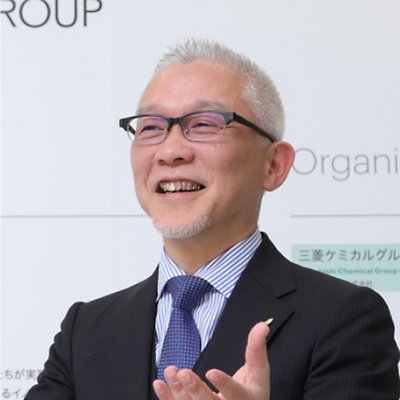
Mr. Jun Kato, Head of IT Service Operation Division, Mitsubishi Chemical Group Corporation

It is said that digitalization in Japan is 10 to 20 years behind that of the U.S. and European countries, but we have established a system to accelerate business processes using digital technology based on the idea that if we are behind, we should catch up.

Mr. Jun Kato, Head of IT Service Operation Division, Mitsubishi Chemical Group Corporation

“In order to optimize the entire company and make it ‘smarter’, it is not enough to only unify the business systems, but each and every employee in the company must learn how to work smarter using digital technology,” said Jun Kato, director, Head of IT Service Operation Division, Mitsubishi Chemical Group Corporation.

“It is said that digitalization in Japan is 10 to 20 years behind that of the U.S. and European countries, but we have established a system to accelerate business processes using digital technology based on the idea that if we are behind, we should catch up,” said Kato. As he stated, they are aiming to become a “Digital Chemical Company” by “making all of the 70,000 employees smarter” based on the concept of “Smarter Employee.”

“Smarter Employees'' are defined as “people who are able to solve problems on their own and work voluntarily towards a better way of working”, while utilizing digital technology by themselves. The company aims to create and maintain a smarter work environment where employees can receive better feedback, thereby increasing engagement and building a feedback loop that enhances each other, which in turn drives cultural change and promotes a mindset of value creation.

As its concrete initiatives, the company is working to visualize work styles to increase employee engagement and provide places and tools for each employee to solve problems on their own.

Project 1: Visualizing Work Styles to Increase Employee Engagement
As they have gone through a series of mergers and integrations, the company has been faced with the disorderly use of various portals, business applications, and content as they move forward with standardization. “We wanted to take it one step further by first having all employees use a standardized platform,” recalled Kato. To solve this issue, they are promoting a project to build a platform that allows centralized access to apps and content via Microsoft Teams.

The foundation of this platform is a dashboard that visualizes how employees work, named the “Smarter Employee Dashboard”. This dashboard is powered by the employee engagement platform Microsoft Viva Insights.

“This dashboard allows us to visualize usage of communication tools, work attendance, and so on. By looking at the data, we can improve our own work style, and managers can give advice to their team members. It is not a measure that directly contributes to the company's profit, but I think it is very valuable in terms of streamlining and standardizing operations,” said Mr. Kato.

The need for the Smarter Employee Dashboard was partly due to changes in the way employees work, said Ayano Sekita, of End-User Platform Management Group, IT Service Operation Division, Mitsubishi Chemical Corporation, who was in charge of implementing Microsoft Viva Suits including Viva Insights.
Ms. Ayano Sekita, Digital Workplace Service Dept., IT Service Operation Division, Mitsubishi Chemical Corporation

We are also considering using Copilot in Microsoft Viva in the future.

Ms. Ayano Sekita, Digital Workplace Service Dept., IT Service Operation Division, Mitsubishi Chemical Corporation

Sekita said, “After the pandemic, there remained differences in working styles, with back-office workers working remotely and those at regional branches and group companies commuting to their offices. This created a situation where the two were disconnected. We thought that visualizing working styles would help to revitalize collaboration within the company.”

The Smarter Employee Dashboard has been built in close collaboration with Microsoft Japan. “Since July 2023, when we decided to introduce the system, Microsoft Japan has formed a dedicated team for our company and have been holding weekly one-hour long meetings. When we decided on items for the dashboard, we asked them to extend the meeting time so that we could discuss them more in depth and prepare for the release,” said Sekita.

The Smarter Employee Dashboard was preliminarily rolled out in January 2024 to departments within the company that have digital jurisdiction. After fine-tuning based on the feedback from approximately 600 employees, formulating guidelines, and identifying potential problems, they are planning to roll it out company-wide.

According to Sekita, the initial rollout has been generally well received, with a decrease in late arrivals to Teams meetings and active participation in the social community features of Microsoft Viva Engage. This is a positive response to the Smarter Employee concept of “people who can solve problems on their own and work towards a better way of working on their own initiative.”

Sekita explains, “After the company-wide rollout, we plan to continually update the system to link with HR and general administration data and set up items using data outside of Microsoft 365. We are also considering using Copilot in Microsoft Viva in the future.” Integration with internal portals and business applications is planned to be carried out in the long-term, taking into account operational methods and costs.

Project 2: Providing tools and a space for each employee to solve their own problems
The company is trying to promote change from the bottom up, in parallel with clear Smarter Employee guidelines from management. Kato emphasizes, “When talking about the Smarter Employee project, the existence of the 'early adopter group' is indispensable.”

For example, when the company participated in the “Microsoft Copilot for Microsoft 365 Early Access Program,” it recruited employees interested in generative AI from departments both within and outside of the digital domain. They are trying to capture the enthusiasm for new things that exists outside of the IT department, and they want to reflect that in their transformation.

One of the bottom-up initiatives that is creating a movement within the company is a citizen development project that utilizes the Microsoft Power Platform, which is a low-code development tool.

Leading this project are Yusuke Sugamo, Group Manager of Infrastructure Application Management Group, and Shingo Tsuchiya from End-User Platform Management Group - they are both from Digital Workplace Service Department, IT Service Operation Division, Mitsubishi Chemical Corporation. Sugamo is responsible for the maintenance and operation of the company's common application infrastructure. Tsuchiya is in charge of the infrastructure design and construction of the Power Platform.

The two early adopters of the citizen development project are Kazuki Kasai of the DX and Promotion of Core Manufacturing Technology Group, Planning and Coordination Department, Hiroshima Plant, Mitsubishi Chemical Corporation, and Manami Hori of the Data Science Group, Data Excellence Department, Business Process Transformation Division, Mitsubishi Chemical Corporation. They are promoting a company-wide citizen development project that transcends the boundaries of business locations.

The momentum for citizen development grew in 2021. This was the year that Mitsubishi Chemical Group announced its management policy, “Forging the future.”
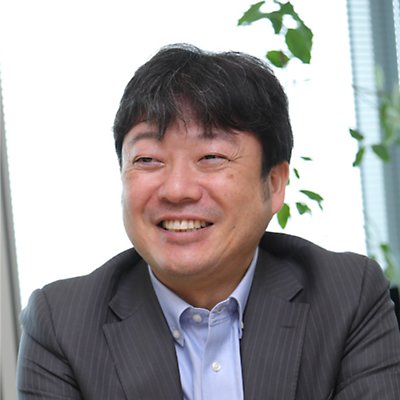
Mr.Yusuke Sugamo, Digital Workplace Service Dept., IT Service Operation Division, Mitsubishi Chemical Corporation

As a system administrator, we have to add regulations in consideration of the disorderly proliferation of applications and the security aspect. In such a situation, we are very grateful that early adopters are voluntarily devising ways to spread the system in their respective locations.

Mr.Yusuke Sugamo, Digital Workplace Service Dept., IT Service Operation Division, Mitsubishi Chemical Corporation

“Power Platform was available with Microsoft 365 licenses up to that point, but we felt that it was too early to use it as the foundation for our applications. In 2022, we re-examined the functionality, established internal rules, and opened up the development environment to the entire company,” said Sugamo.

When Kasai saw the release announcement of the Power Platform in the DX staff community on Teams, he voluntarily started learning Power Platform and was fully prepared for the day of the release. “I wasn't originally familiar with these tools, but my sense of mission as a DX person drove me to actively seek out ways to utilize Power Platform,” said Kasai.

Hori, on the other hand, was in her first year with the company at the time. She became interested in Power Platform when it was introduced during new employee training. “I had no previous programming experience, but it was easy to use, and I enjoyed the immediate visualization of the output,” recalled Hori. Later, she was assigned to the DX team and naturally began participating in citizen development projects.

Citizen development projects have changed the atmosphere within the company
Kasai and Hori actively worked to spread citizen development in their respective capacities. Kasai developed an application in response to a request from a manufacturing site for a digitalized operation check system. This system, which would have cost 200 million yen to implement with the interlocks and therefore considered to be not cost-effective, was actually produced for about 1 million yen and this quickly yielded results.
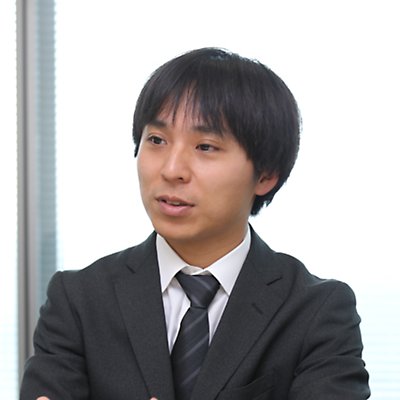
Mr. Shingo Tsuchiya, Digital Workplace Service Dept., IT Service Operation Division, Mitsubishi Chemical Corporation

We feel the enthusiasm building to the point where, when we announce a hands-on seminar for the Power Platform, the slots fill up in a matter of seconds.

Mr. Shingo Tsuchiya, Digital Workplace Service Dept., IT Service Operation Division, Mitsubishi Chemical Corporation

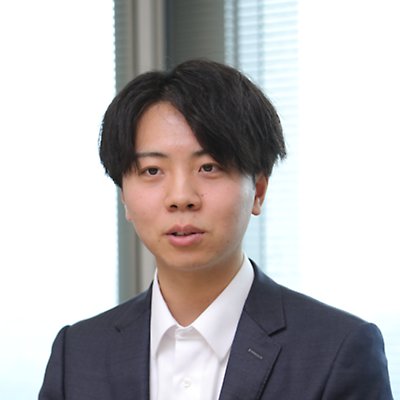
Kasai reflected, “I could not have accomplished this project on my own. I believe that the excellent results were achieved because everyone who was familiar with the worksite proactively proposed ideas and systems.” This experience has increased the momentum for the use of digital technology among the staff at the production site. “We have received comments that their concerns about manual labor have been resolved, and all of our on-site employees, including seasoned professionals, have become more proactive about digital technology,” says Kasai.

Hori is working to promote the Power Platform by organizing study sessions and releasing video content at the Kyushu office. She is also utilizing the “Reverse IT Mentor Scheme,” in which younger employees with digital skills serve as mentors for managers, to introduce and lecture on the Power Platform at the local office, thereby gradually enhancing the level of understanding and fostering an atmosphere in which on-site employees are able to solve problems with applications on their own. This has helped to steadily embed citizen development within the company.

“Those who had experienced application development gradually began to share that 'it's fun to turn ideas into reality,' and this atmosphere spread to the entire section staff, and now the entire worksite is actively engaged in the project,” said Hori.

While the positive effects of the DX were accumulating one after another, Kasai began to feel that sharing information between offices and departments was a challenge. Together with members of the DX community, he planned a company-wide presentation of the results of citizen developers.

“We wanted to provide a place for citizen developers to showcase their work, and we also thought it was important for managers to understand the potential of the apps and the importance of citizen development,” said Kasai. This event was held at the Hiroshima office, where more than 400 people from offices across Japan gathered. They were inspired by the way people in the same position as themselves overcame their challenges through citizen-developed apps.

Kasai said, “The survey showed that about 90% of the respondents got ideas for the Power Platform utilization, and about 60% said they wanted to start developing applications.” This was a greater-than-expected result. “We hope to use this as an opportunity to involve those interested in citizen development and turn it into an even bigger movement,” Kasai continued enthusiastically.

Hori also added, “I am most struck by feedback that starting to learn about the Power Platform has allowed participants to grow and work more enthusiastically.” This citizen development project seems to be serving not only as an opportunity to improve operations, but also as an opportunity for growth and challenge.

Hearing Kasai and Hori's words, Sugamo and Tsuchiya also express relief. “As a system administrator, we have to add regulations in consideration of the disorderly proliferation of applications and the security aspect. In such a situation, we are very grateful that early adopters are voluntarily devising ways to spread the system in their respective locations.”

“We feel enthusiasm building to the point where, when we announce a hands-on seminar for the Power Platform, the slots fill up in a matter of seconds. In order not to hinder the momentum for the citizen development, we would like to continue to provide support while considering the balance between convenience and security by utilizing control functions within tenants, with the cooperation of Microsoft Japan,” said Tsuchiya.

Experience, including both failures and successes, will contribute to achieving goals.

“I believe that having these early adopters gain experience, both failures and successes, and passing it on to others, will help us achieve our goals,” said Kato. The members of this citizen development project, who transcend the boundaries of offices and departments, are the forerunners of the Smarter Employees.
Mr. Kazuki Kasai, Hiroshima Plant, Operation for Japan Division, Mitsubishi Chemical Corporation

We have received comments that their concerns about manual labor have been resolved, and all of our on-site employees, including seasoned professionals, have become more proactive about digital technology.

Mr. Kazuki Kasai, Hiroshima Plant, Operation for Japan Division, Mitsubishi Chemical Corporation

This is how the Mitsubishi Chemical Group is steadily advancing its transformation, while achieving synergy between the top-down measures under the Smarter Employee initiative and the bottom-up measures through the promotion of citizen development. The strong will of management and the employees who respond to it remind us of the clear fact that a company exists to provide people with happiness.

This coincides with Microsoft's corporate mission - “to empower every individual and every organization on the planet to achieve more.” We at Microsoft Japan will continue to strive to provide even greater support so that we can continue to work with them on the path to making their vision a reality.
Ms. Manami Hori, Data Excellence Dept., Business Process Transformation Division, Mitsubishi Chemical Corporation

I am most struck by the feedback that starting to learn about the Power Platform has allowed participants to grow and work more enthusiastically.

Ms. Manami Hori, Data Excellence Dept., Business Process Transformation Division, Mitsubishi Chemical Corporation

Take the next step

Fuel innovation with Microsoft

A man wearing headphones and smiling

Talk to an expert about custom solutions

Let us help you create customized solutions and achieve your unique business goals.
A woman smiling and a pointing to a screen showing some statistics

Drive results with proven solutions

Achieve more with the products and solutions that helped our customers reach their goals.

Follow Microsoft