This is the Trace Id: b92e78260e511a302ab40811e2e40148
10/8/2026

NFP shifts from AI that assists to AI that executes with Microsoft Copilot Cowork

NFP's benefits and insurance teams lost hours to document-heavy, regulated work and redundant data entry across systems that were never designed to talk to each other.

With Microsoft Copilot Cowork, NFP gave employees an agent that does not just draft work but executes it, grounded in the company's own data and guided by a clear tool-selection framework.

A single governance dashboard alone finished 100 hours of human work in minutes.

NFP

An AI-first ambition at a leading insurance broker

NFP, an Aon company, is one of the largest insurance brokers and consultants in North America, serving clients across property and casualty insurance, employee benefits, retirement, and wealth management. Headquartered in New York with more than 7,000 employees across the United States, Canada, the United Kingdom, and Ireland, NFP operates in a world of document-heavy, highly regulated work where accuracy and compliance are mandatory.

That environment shapes how NFP approaches technology. The company holds an AI-first adoption mindset: whenever a task is repeatable or a common process has a friction point, employees are encouraged to turn to the company's full spectrum of Microsoft AI tools, including Microsoft 365 Copilot, Microsoft 365 Copilot Chat, Microsoft Copilot Studio, Microsoft Power Platform, and Microsoft Fabric.

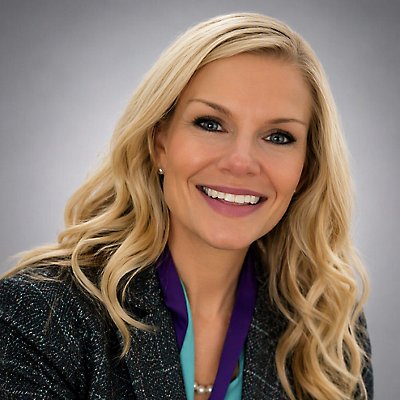
The gamechanger in NFP's workflow is Microsoft Copilot Cowork. NFP’s ambition was greater than faster drafting; it wanted AI to become part of how work gets done—safely, transparently, and with measurable business value. Jennifer Ratten, VP of Application Engineering, NFP touts Cowork’s transformative impact within the company saying, “Cowork moved NFP from a vision of AI assistance to AI execution.”

Jennifer Ratten, VP of Application Engineering, NFP

“Cowork moved NFP from a vision of AI assistance to AI execution.”

Jennifer Ratten, VP of Application Engineering, NFP

Document-heavy work and early experimentation with AI 

NFP operates in a document-heavy, highly regulated environment where valuable work rarely lives in one place. A single assignment can require employees to find policy language, reconcile prior proposals, review emails and meeting notes, check internal standards, and assemble the result for human approval. The work demands judgment, but much of the effort goes into coordination: locating sources, moving information between tools, formatting deliverables, and tracking the next step. 

Insurance agents selling individual health and Medicare policies process applications in every region of the United States, keying each one into a central input and then re-keying it into an agency management system, with a long trail of validations, checkpoints, and region-specific naming and storage rules along the way. The same information must be entered repeatedly across systems that are not always integrated into a single tenant, so teams build APIs and custom solutions to move data between platforms. 

In custom-built agentic workflows, teams had to design each human-in-the-loop checkpoint themselves, from when the agent should pause for validation to when it should request approval before acting, and uncertainty lingered. So, while it would be a relief to delegate labor-intensive manual tasks, NFP employees were understandably cautious about letting an AI agent act on a human’s behalf. That hesitation slowed adoption of exactly the kind of automation NFP wanted to encourage.

The turning point, an agent that executes

"For us, 'AI that assists' means the user still owns the workflow," Ratten explains. AI can draft an email or summarize a document, but a person still must find the inputs, move the output, create the follow-up, and complete the next steps.  

AI that executes means the person describes the outcome, reviews the plan, and then allows the agent to carry portions of the work forward—while the person remains in control. "Day to day, that means less copy/paste, less context switching, fewer dropped follow-ups, and more time spent on judgment, client strategy, solution design, and governance," said Ratten.  

What sets Cowork apart is that it is designed with human review in the flow of work. The safeguards NFP wanted were already present within the tool: without being prompted, Cowork asked for approvals, paused for validation before acting, and confirmed when a task was complete. That changes the mental model from “let AI help me write something” to “let AI help me prepare the work, ask for my review and approval, then go execute it and report back.” For Ratten, that was the turning point. Cowork made agentic execution feel more native, secure, and usable without forcing NFP to build every checkpoint from scratch. 

Today, the insurance agents who used to be drowning in individual insurance applications intake work smoothly and without delay. By carrying context across files, conversations, meetings, and business data, Cowork preserves the thread between an initial request and the actions that follow. For meeting follow-up and onboarding, that means gathering prior context, identifying commitments, finding supporting documents, and drafting next steps without forcing an employee to rebuild the history from scratch.

Developers benefit too. NFP had Cowork analyze the end-to-end process, rewrite how it was done to account for every regional requirement and build most of the framework needed to run it in Microsoft Power Automate and Power Platform. This freed developers to focus on the custom API work they had not expected to reach for another six months.

100 hours saved on a single task

The impact became concrete the first time Ratten pointed Cowork at her own backlog. She asked it to build an ongoing Fabric governance dashboard for business-unit leaders, complete with red flags and adoption metrics, and it did far more than she asked. It pulled together insights that had sat on her backlog for six months and surfaced others she would not have thought to add for several iterations. As she recalls, “Cowork did in minutes what would have taken me 100 hours.”

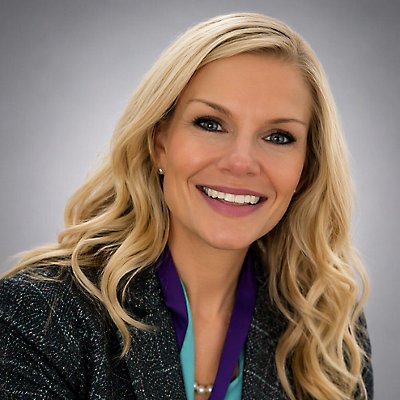
Jennifer Ratten, VP of Application Engineering, NFP

“Cowork did in minutes what would have taken me 100 hours.”

Jennifer Ratten, VP of Application Engineering, NFP

That kind of return is not reserved for experts. From Ratten's experience she firmly believes it is possible for a week's worth of work to be back before lunch, even for people new to AI. Her advice to skeptics is to start with something tangible, like asking Cowork to organize an inbox, because the value is immediate and translates quickly to bigger use cases. Cowork makes it practical to jump in, pick a ready-made prompt, and see time saved with almost no learning curve.

Adoption reflected that shift. With no formal announcement, Cowork spread by word of mouth until roughly 20% of NFP's people were using it, reaching from client services and call centers all the way up to the C-suite, and winning over even skeptical professional developers who now had a tool to write their user stories. "The hesitation that once surrounded agentic automation eased because Cowork is a product with review, approval, and confirmation patterns already built in," explains Ratten.

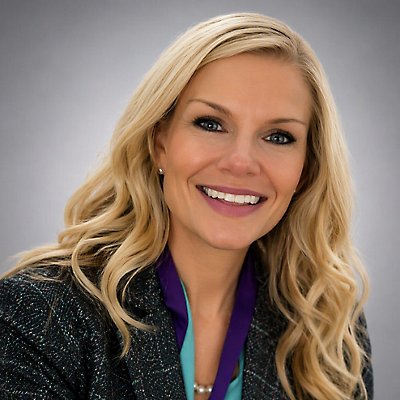
Jennifer Ratten, VP of Application Engineering, NFP

“The hesitation that once surrounded agentic automation eased because Cowork is a product with review, approval, and confirmation patterns already built in.”

Jennifer Ratten, VP of Application Engineering, NFP

Those capabilities show up across a set of high-touch scenarios NFP has leaned into: responding to RFPs by pulling from every proposal the company has won along with product and pricing details, running scheduled regulatory and compliance checks that return a one-page memo of red flags, redlining stacks of contracts against policy and flagging the exact clause that matters, standing up automated customer-onboarding pipelines, and turning a week of meeting transcripts into a clear list of commitments and open items. 

Scaling governed AI across the business

NFP is quickly moving towards durable practice. New governance approval workflows put business-unit and cost-center owners in charge of approving Cowork for their teams and owning the budget, with a short solutioning conversation up front to match each request to the right tool. Behind that sits a constant balancing act across Microsoft Power BI, Fabric capacities, Copilot Studio packs, GitHub Copilot, and Copilot credits, so every budget is spent where it delivers the biggest return.

The team is also putting Cowork to work on its own community platform, asking it to watch for relevant Microsoft offerings and populate the events calendar on NFP's AI and Power Platform resource hub automatically. 

For Ratten, that balance of innovation and control is the point. Rather than block progress the way many organizations do when a new tool is hard to understand, NFP keeps moving forward with automatic governance and AI-assisted tool selection, confident that the Microsoft products behind these tools keep the work secure even when the practice is not yet perfect.

Learn more about NFP by following them on LinkedIn.

Looking for more inspiring agentic AI transformation stories? Explore additional customer successes on the Microsoft Agent Transformation Stories site.

Take the next step

Fuel innovation with Microsoft

Explore more customer stories

Find out how customers are achieving more with Microsoft products and solutions.
A man wearing headphones and smiling.

Talk to an expert about custom solutions

Let us help you create customized solutions and achieve your unique business goals.
Three people in a meeting room.

Transform work with Microsoft AI

Bring intelligence into the flow of work and help your organization achieve its goals with secure, scalable AI solutions.

Follow Microsoft